What Happens on Your First Day of Gorilla Trekking?
What happens on your first day of gorilla trekking? For many travelers, this is the day they have been waiting for.
You wake up before sunrise, put on your trekking clothes, have breakfast, meet your guide, and travel to the gorilla trekking briefing point. A few hours later, you may find yourself deep inside the ancient rainforest of Uganda, standing quietly just a few meters away from a family of mountain gorillas.(What Happens on Your First Day of Gorilla Trekking?)
It is an experience that combines adventure, wildlife, rainforest scenery, anticipation, and one of the most memorable wildlife encounters in Africa.
If you are planning gorilla trekking in Uganda, knowing what happens on the first day of Gorilla Trekking can make the experience much easier and more enjoyable.
In this guide, we explain exactly what you can expect from the moment you wake up until you return to your lodge.
Where Does Gorilla Trekking Take Place in Uganda?
Gorilla trekking in Uganda takes place in Bwindi Impenetrable National Park and Mgahinga Gorilla National Park.
Bwindi is divided into four main trekking sectors: Buhoma, Ruhija, Rushaga, and Nkuringo. The sector where you trek depends on your gorilla permit and the gorilla family allocated to your group.
Bwindi is famous for its ancient rainforest, steep hills, valleys, rich biodiversity, and mountain gorillas.
For travelers staying in the southern sectors, including Rushaga and Nkuringo, the surrounding landscape also offers spectacular views of the Virunga mountains.
Your First Morning Starts Early
Your first day of gorilla trekking usually starts early.
You will normally wake up at your lodge before sunrise. Have breakfast, prepare your daypack, put on your hiking boots, and make sure you have everything you need for the forest.
This is not a morning when you want to sleep late.
Your World Blossom Safaris driver-guide will help ensure that you arrive at the appropriate briefing point on time.
Before leaving your lodge, make sure you have:
- Gorilla trekking permit
- Passport or required identification
- Sturdy hiking boots
- Long trousers
- Long-sleeved shirt
- Rain jacket
- Daypack
- Drinking water
- Snacks for the trek
- Camera with extra battery
- Walking stick if needed
- Hat and sunscreen
- Insect repellent
- Waterproof protection for electronics
Bwindi is a rainforest, so rain can occur even when the morning begins with sunshine.
Arriving at the Gorilla Trekking Briefing Point
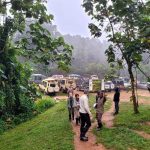
One of the first official steps of your Uganda gorilla trekking experience is registration and briefing.
Uganda Wildlife Authority guidelines require visitors to report to the designated entry point for permit or ticket validation, orientation, and briefing before tracking begins. Visitors are accompanied by UWA guides and trackers during the activity.
This is also when the excitement really begins.
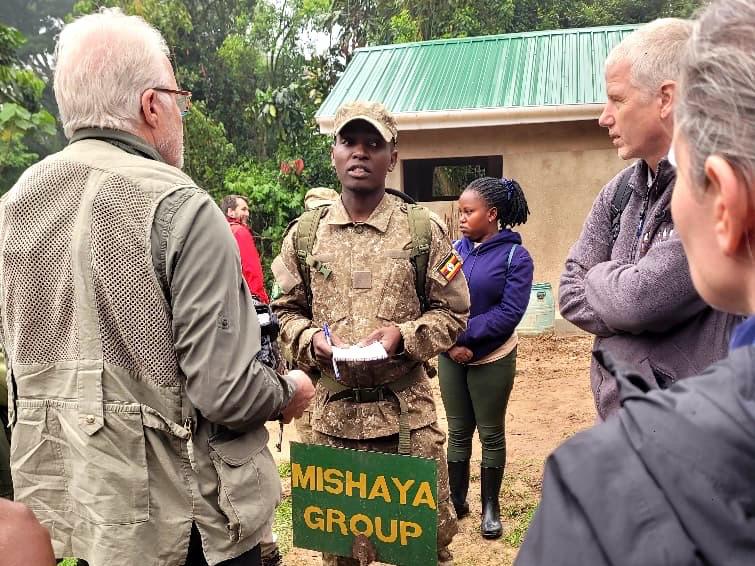
You will meet other trekkers, your UWA guide, trackers, and other members of the trekking team.
Your guide will explain important information about the trek and the rules you must follow when you encounter the gorillas.
Pay close attention.
The rules are designed to protect both visitors and the gorillas.
The Gorilla Trekking Briefing
The briefing is an important part of your first day of gorilla trekking.
You will receive instructions about how to behave in the forest and around the gorillas.
For example, UWA guidance includes maintaining the required distance from gorillas, avoiding flash photography, not eating or drinking while with the gorillas, and not entering the forest if you have a cold or other infectious illness.
Your guide will also explain how to behave if a gorilla approaches you.
The most important thing is to remain calm and follow the instructions of your guides and trackers.
You are entering the gorillas’ natural environment.
Respecting their space is part of responsible gorilla tourism.
Then the Trek Begins(What Happens on Your First Day of Gorilla Trekking?)
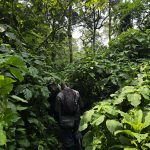
After the briefing, your group enters the forest.
This is the moment many travelers remember forever.
At first, you may be walking along a relatively open trail. Soon, however, the vegetation can become thicker and the terrain more challenging.
Bwindi is not a flat forest.
You may walk up and down steep slopes, cross muddy sections, step over roots, and move through dense vegetation.
The forest can be wet and slippery, especially after rain.
But this is also what makes gorilla trekking in Uganda such a special adventure.
You are not visiting an enclosure.
You are walking through a living rainforest in search of wild mountain gorillas.
How Long Does Gorilla Trekking Take?
One of the most common questions travelers ask is:
“How long will my gorilla trek take?”
There is no exact answer.
Uganda Wildlife Authority says gorilla tracking can take approximately 2 to 7 hours, depending on conditions and where the gorilla family is located.
The gorillas move through the forest.
Your trackers follow their movements and communicate with your guide about where the family has gone.
This means you should not book your day around an exact return time.
Some travelers find the gorillas relatively quickly.
Others spend several hours walking through the forest before reaching the family.
The journey is part of the experience.
Following the Gorilla Trackers
Experienced trackers go ahead of the trekking group to look for signs of the gorilla family.
They may follow footprints, broken vegetation, feeding signs, nests, or other evidence of the gorillas’ movements.
The tracker team plays an important role in helping the group locate the gorillas while also supporting the safety and management of the encounter.
Your guide will communicate with the trackers and lead you through the forest.
You may spend much of the trek listening to birds, insects, monkeys, and the sounds of the rainforest.
Then suddenly, your guide may signal that you are getting close.
The excitement rises immediately.
The Moment You Finally See the Gorillas(What Happens on Your First Day of Gorilla Trekking?
And then it happens.
You see your first gorilla.
Perhaps it is a silverback sitting quietly among the vegetation.
Perhaps you see a mother carrying or caring for her infant.
Maybe a young gorilla is playing nearby.
For many people, this is the emotional highlight of their Uganda gorilla safari.
The forest suddenly becomes very quiet.
Your attention focuses completely on the gorillas.
You may realize that you are standing in the natural habitat of one of the world’s most remarkable animals.
The encounter can feel peaceful, powerful, and surprisingly personal.
Your Gorilla Encounter Is Limited
Once you reach the gorilla family, your group will follow the instructions of the UWA guide.
Current UWA guidance states that visits are limited to one hour per gorilla group per day, and a maximum of eight visitors may visit a gorilla group. UWA also specifies the required viewing distance and other rules designed to reduce disturbance and disease transmission.
That hour can pass extremely quickly.
You may spend your time taking photographs, observing the gorillas’ behavior, and simply enjoying the moment.
Do not spend the entire encounter looking through your camera.
Take some photographs.
Then put the camera down.
Watch.
Listen.
Enjoy being there.
What Does It Feel Like to Stand Near a Mountain Gorilla?
This is the part that is difficult to explain with photographs.
You may have seen mountain gorillas in documentaries.
You may have watched hundreds of videos online.
But seeing them in their natural environment is completely different.
A silverback can appear enormous and powerful.
A young gorilla may be playful and curious.
A mother may be completely focused on her infant.
The gorillas have individual personalities and behaviors.
And while you are watching them, they may also notice you.
This is not a performance.
There is no guarantee that a gorilla will walk toward you, pose for your camera, or behave in a particular way.
That unpredictability is part of what makes gorilla trekking in Uganda so memorable.
What Happens After the Gorilla Encounter?
When your one-hour viewing period is finished, your guide will tell the group that it is time to leave.
You will then begin walking back through the forest.
Sometimes the return journey feels easier because the biggest question has already been answered.
You found the gorillas.
You saw them.
You experienced the forest.
But you may also be tired.
Remember that your total trek can take several hours.
Returning to the Lodge
Once you leave the forest, you return to the briefing area or meeting point and then travel back to your lodge.
This is usually when travelers start talking about everything they have just experienced.
Someone will have taken an amazing photograph.
Someone else will remember a particular silverback.
Another traveler will talk about the steepest part of the trail.
Everyone will have a different story.
Back at the lodge, enjoy a well-earned meal, shower, relax, and give your body time to recover.
If you have another safari activity planned for the following day, your guide can help you prepare for it.
Is Gorilla Trekking Difficult?
The difficulty varies.
UWA describes gorilla tracking as requiring moderate fitness, but the actual experience depends on the terrain, weather, location of the gorilla family, and your own fitness level.
Bwindi contains steep ridges and valleys, and some trails can be muddy or slippery.
You do not need to be an elite athlete.
However, you should be comfortable walking for several hours over uneven terrain.
If you have concerns about the physical challenge, tell your safari operator before the trek.
At World Blossom Safaris, we can discuss your preferred trekking sector and help you prepare according to your itinerary and interests.
What Should You Wear for Your First Gorilla Trek?
Choosing the right clothing can make a big difference.
We recommend:
Wear:
- Waterproof hiking boots
- Long trousers
- Long socks
- Long-sleeved shirt
- Lightweight waterproof jacket
- Comfortable hiking clothes
- Gardening gloves if you want additional protection from vegetation
- Hat or cap
Avoid:
- Open sandals
- Very short trousers
- Uncomfortable shoes
- Clothing that restricts movement
The rainforest can be wet and muddy.
Dress for the forest rather than for the lodge.
What Should You Put in Your Daypack?
Keep your daypack practical and lightweight.
Carry:
- Drinking water
- Snacks
- Rain jacket
- Camera
- Extra batteries or power bank
- Passport or required identification
- Small first-aid items
- Insect repellent
- Tissues
- Waterproof bags for electronics
You do not need to carry your entire suitcase into the forest.
Pack only what you genuinely need.
Can You Get a Porter?
Yes, travelers can use porters to assist with carrying belongings and, where needed, provide physical assistance on the trail.
Hiring a porter can make your trek easier and also provides an opportunity for your tourism spending to directly support people living around the park.
If you think you may need assistance, speak with your guide before beginning the trek.
What If It Rains?
Do not panic.
Rain is part of the rainforest experience.
Bwindi is a tropical rainforest, and weather can change quickly.
This is why a waterproof jacket and protection for your camera and other electronics are so important.
The rain may make the trail muddy and slippery, but it can also make the forest feel even more atmospheric.
Mist moves through the trees.
Leaves shine with water.
Birds call from the vegetation.
And somewhere ahead, your trackers continue searching for the gorilla family.
What If You Are Sick on the Morning of the Trek?
Tell your safari operator and UWA staff if you are unwell.
This is particularly important if you have symptoms of a cold or another infectious illness.
Mountain gorillas are susceptible to human respiratory illnesses, which is one reason health-related trekking rules are taken seriously. UWA specifically advises visitors not to visit gorillas if they have a cold or other infectious illness.
Responsible tourism means protecting the animals as well as enjoying the experience.
Why Your First Gorilla Trekking Day Is So Special
Your first day is not simply a hike.
It is a journey into one of Uganda’s most important protected forests.
It is the anticipation of searching for gorillas.
It is the sound of the rainforest.
It is the challenge of the trail.
It is the moment your guide says, “The gorillas are here.”
And it is the unforgettable feeling of seeing a mountain gorilla in its natural environment.
Uganda’s gorilla conservation story is also closely connected with long-term protection, research, law enforcement, tourism, and community participation.
When you book a responsible gorilla safari, your experience becomes part of a much larger conservation story.
Why Book Your Gorilla Trekking Safari with World Blossom Safaris?
Planning a gorilla trek involves more than purchasing a permit.
You need the right trekking sector, accommodation, transport, timing, meals, permits, and safari activities.
World Blossom Safaris is a Uganda-based tour and travel company specializing in gorilla trekking, chimpanzee tracking, wildlife safaris, cultural experiences, and tailor-made Uganda safari holidays.
We can help organize:
- Gorilla trekking in Bwindi
- Gorilla trekking in Mgahinga
- Gorilla permits
- Private 4×4 safari vehicles
- Professional English-speaking driver-guides
- Accommodation
- Airport transfers
- Chimpanzee tracking in Kibale
- Queen Elizabeth wildlife safaris
- Murchison Falls safaris
- Lake Mburo safaris
- Rwanda-Uganda gorilla combinations
- Kenya and Tanzania safari extensions
We can also tailor your itinerary around your travel dates, budget, accommodation preference, and interests.
Ready to Experience Gorilla Trekking in Uganda?
If you have been dreaming about standing in the misty forest and seeing mountain gorillas in their natural habitat, now is the time to start planning.
Contact World Blossom Safaris for your Uganda gorilla trekking safari.
Tell us:
- Your preferred travel dates
- Number of travelers
- Nationality
- Preferred accommodation level
- Approximate budget
- Whether you want gorillas only or a complete Uganda safari
We will help you build a practical itinerary around your plans.
Let’s blossom together to the Pearl of Africa.
Frequently Asked Questions About Your First Day of Gorilla Trekking
What time does gorilla trekking start in Uganda?
Gorilla trekking normally begins in the morning after registration, permit verification, orientation, and briefing. Exact timing can depend on the trekking sector and current UWA arrangements. Historical UWA information for Bwindi describes registration followed by briefing and then the start of tracking.
How long does a gorilla trek take?
UWA currently states that gorilla tracking may last approximately 2 to 7 hours, depending on the location and movement of the gorilla family.
How long can I stay with the gorillas?
The standard gorilla viewing period is one hour per gorilla group under current UWA rules.
Is gorilla trekking difficult?
It can be physically demanding because Bwindi and the surrounding gorilla habitats include steep and uneven terrain. Fitness requirements vary according to the trek and location.
Can children go gorilla trekking in Uganda?
UWA’s current gorilla tracking rules set the minimum age at 15 years.
What happens if the gorillas are far away?
Your trackers and guides continue searching for the gorilla family and lead you through the forest. The duration of the trek can therefore vary considerably.
Should I hire a porter?
A porter can be useful for carrying your daypack and assisting you on difficult sections of the trail. It can also provide income to people living around the park.
What is the most important thing to remember?
Follow your UWA guide and trackers.
They know the forest, understand the trekking procedures, and are responsible for guiding your group during the gorilla encounter.
Your job is to walk, listen, observe, respect the gorillas, and enjoy one of Uganda’s most extraordinary wildlife experiences.
So, what happens on your first day of gorilla trekking?
You wake early.
You prepare.
You attend the briefing.
You enter the rainforest.
You follow the trackers.
You climb through the hills and valleys.
You search.
And eventually, if your trek reaches the gorilla family, you experience something that photographs can never fully capture:
a mountain gorilla looking back at you from the ancient forests of Uganda.
That is the magic of gorilla trekking.(What Happens on Your First Day of Gorilla Trekking?)
And that is why so many travelers consider their first gorilla trek one of the defining experiences of their African safari.
Ready to plan your trip? Talk to our experts.
Book This Safari